ValidateVision Blog

Expert insights on idea validation, startup strategy, market research, and business innovation. Learn how to validate your business ideas effectively.

Business Idea Validation Framework
Idea Validation

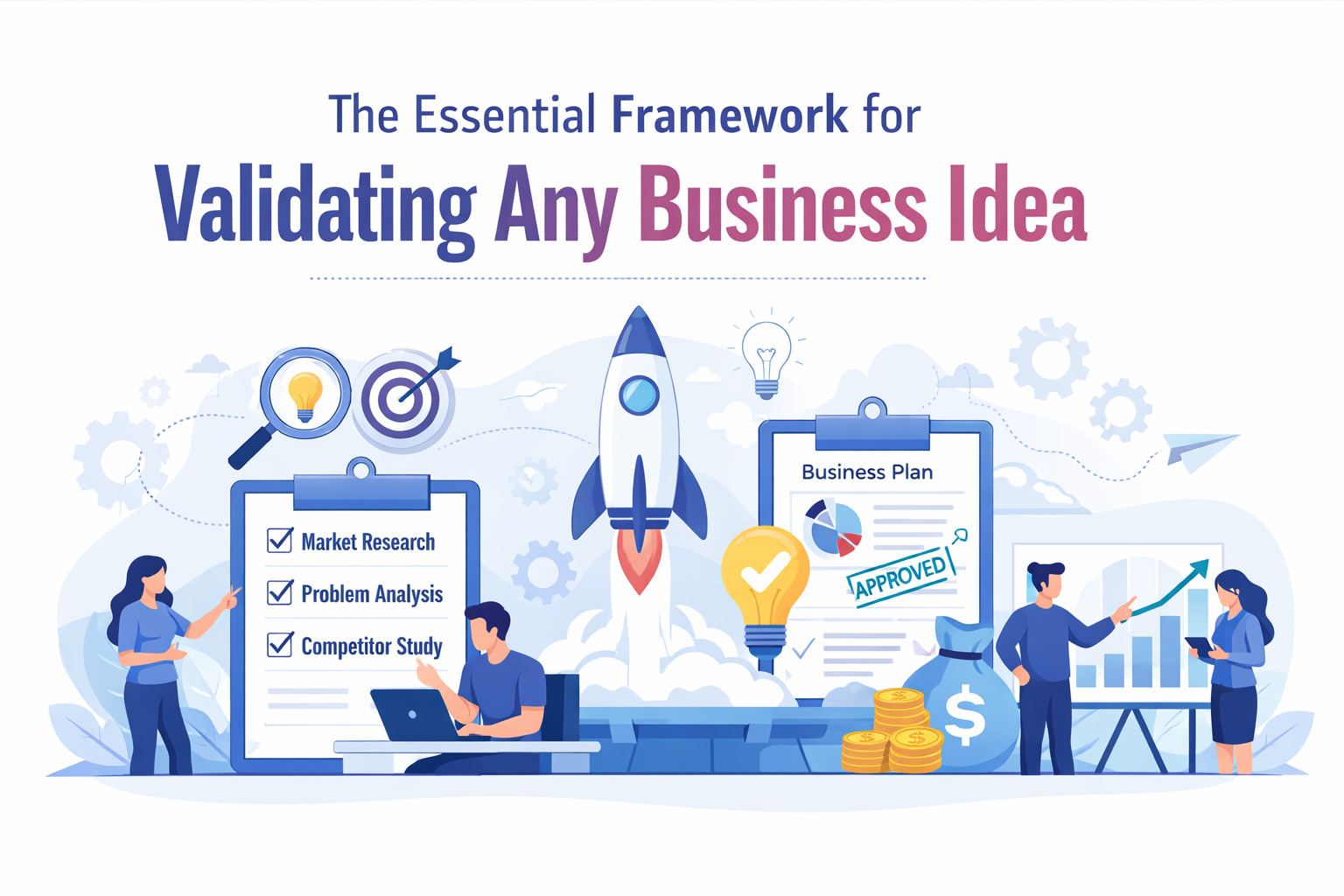
The Essential Framework for Validating Any Business Idea

Every successful business starts with a validated idea. Yet most entrepreneurs skip this critical step and dive straight into building. This article outlines a proven 5-step framework for validating any business idea before you invest time, money, or resources.

Step 1: Problem Validation

Before you can solve a problem, you need to confirm it exists. Start by interviewing at least 20 potential customers. Ask open-ended questions about their challenges, current solutions, and what they wish existed. Look for patterns and emotional responses - pain points people feel strongly about are the best opportunities.

Step 2: Solution Validation

Once you've confirmed the problem, test your solution. Create a simple landing page describing your solution and see if people will sign up or pre-order. Use tools like Carrd or Unbounce to build quick landing pages without coding. Track conversion rates - if 5-10% of visitors show interest, you're on the right track.

Step 3: Market Validation

Size matters. Use tools like Google Keyword Planner, industry reports, and competitor analysis to estimate your total addressable market. A viable market should be large enough to support your business goals but not so crowded that entry is impossible.

Step 4: Business Model Validation

Can you make money? Test different pricing models through surveys and interviews. Ask potential customers what they'd pay and why. Calculate your customer acquisition cost and lifetime value early - if CAC > LTV, you need to rethink your model.

Step 5: Execution Validation

Finally, test your ability to deliver. Build a minimum viable product (MVP) that solves the core problem. It doesn't need to be perfect - it needs to be testable. Launch to a small group, gather feedback, and iterate quickly.

Key Metrics to Track: Customer interviews conducted, landing page conversion rate, market size estimate, willingness to pay, MVP user retention.

This framework isn't about finding the perfect idea - it's about finding problems worth solving and validating that people will pay for your solution. Spend 80% of your time validating before you start building.
2026 Startup Trends Analysis
Market Research

2026 Startup Trends: What Successful Founders Are Focusing On

The startup landscape evolves rapidly. As we approach 2026, several key trends are emerging that successful founders are leveraging. Based on our analysis of market signals, investor activity, and consumer behavior, here's what you should focus on.

1. AI Integration Beyond Chatbots

AI is moving from novelty to necessity. The most successful startups are using AI to:

  • Automate complex workflows (not just customer service)
  • Provide hyper-personalized experiences
  • Predict maintenance and failures before they happen
  • Optimize supply chains and logistics

Look for opportunities where AI can create 10x improvements, not just marginal gains.

2. Sustainable Business Models

Sustainability is now a competitive advantage, not just a nice-to-have. Investors are prioritizing:

  • Circular economy models (reduce, reuse, recycle)
  • Carbon-neutral operations
  • Products with minimal environmental impact
  • Transparent supply chains

3. Hybrid Work Optimization

The future is hybrid, and startups that solve hybrid work challenges are thriving. Focus on:

  • Tools that bridge physical and digital collaboration
  • Solutions for asynchronous team coordination
  • Platforms that maintain company culture remotely
  • Products that enhance focus in distraction-filled environments

4. Health Tech Personalization

Healthcare is shifting from reactive to proactive. Opportunities exist in:

  • Personalized nutrition and fitness platforms
  • Mental health support tailored to individual needs
  • Wearables that provide actionable health insights
  • Telehealth that feels personal, not transactional

Common Pitfalls to Avoid

Based on our analysis of failed startups, avoid these mistakes:

  1. Building for trends without understanding underlying needs
  2. Over-engineering solutions before validating demand
  3. Ignoring unit economics in pursuit of growth
  4. Failing to adapt when initial assumptions prove wrong

Actionable Takeaway: Don't just follow trends blindly. Use them as inspiration, then validate rigorously. The most successful startups solve real problems for specific audiences, regardless of the trend.